
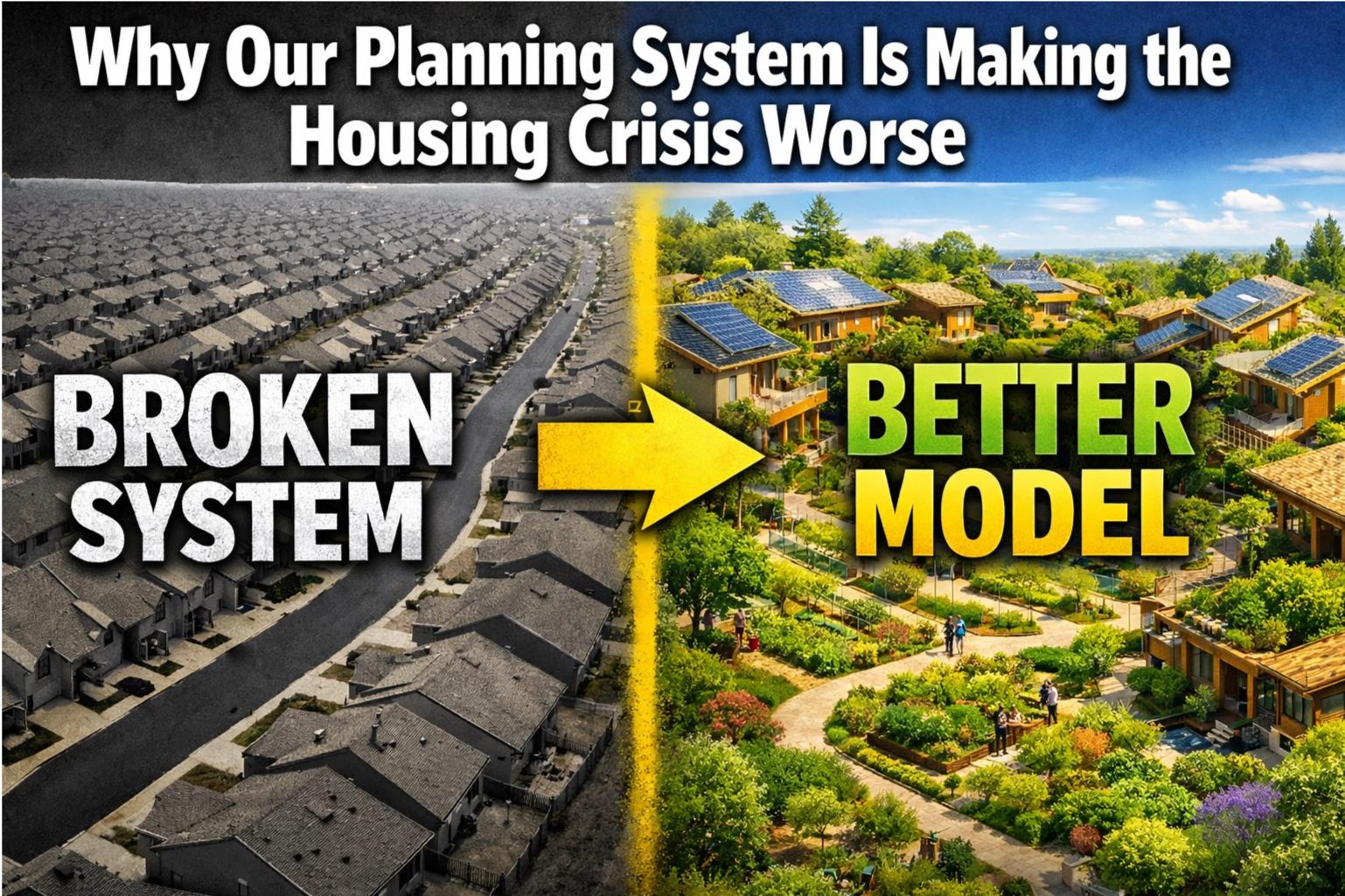
Reshaping Aotearoa’s Planning Laws: Regenerative Housing, Community Agency, and Structural Affordability
New Zealand’s housing problems stem from a system producing unaffordable, isolating, and environmentally harmful outcomes. Now is a major opportunity as the government rewrites the Planning Bill and Natural Environment Bill. Zola summarizes her submission, urging laws to explicitly enable regenerative land use, community-led development, and structural affordability, including a national definition and permitted status for tiny homes, rural cluster housing/eco-villages, mixed-use “circular economy village” models, inclusionary zoning incentives, and legal recognition and support for cooperatives and community land trusts, with housing treated as a human right. Zola advocates transitioning from resource-intensive animal agriculture to plant-based land use with farmer pathways.
From Vision to Reality of Building a Thriving Ecovillage: Interview with founder Lyndall Parris
Zola interviews Lyndall Parris, founder and resident of Narara Ecovillage on Australia’s Central Coast (about an hour from Sydney), about what it takes to create and lead an intentional ecovillage from vision to reality and what daily life feels like there.
We learn about Narara’s cooperative membership model (including the $30,000 buy-in), efforts toward affordability and intergenerational living through CLAN, and key sustainability infrastructure such as a smart grid and localized water systems.
Lyndall shares the long fundraising and development journey (including setbacks during the financial crisis of 20028, the 2012 tender to buy the property, and 2013 settlement), reflects on belonging, kindness, and ongoing conflict-resolution work.
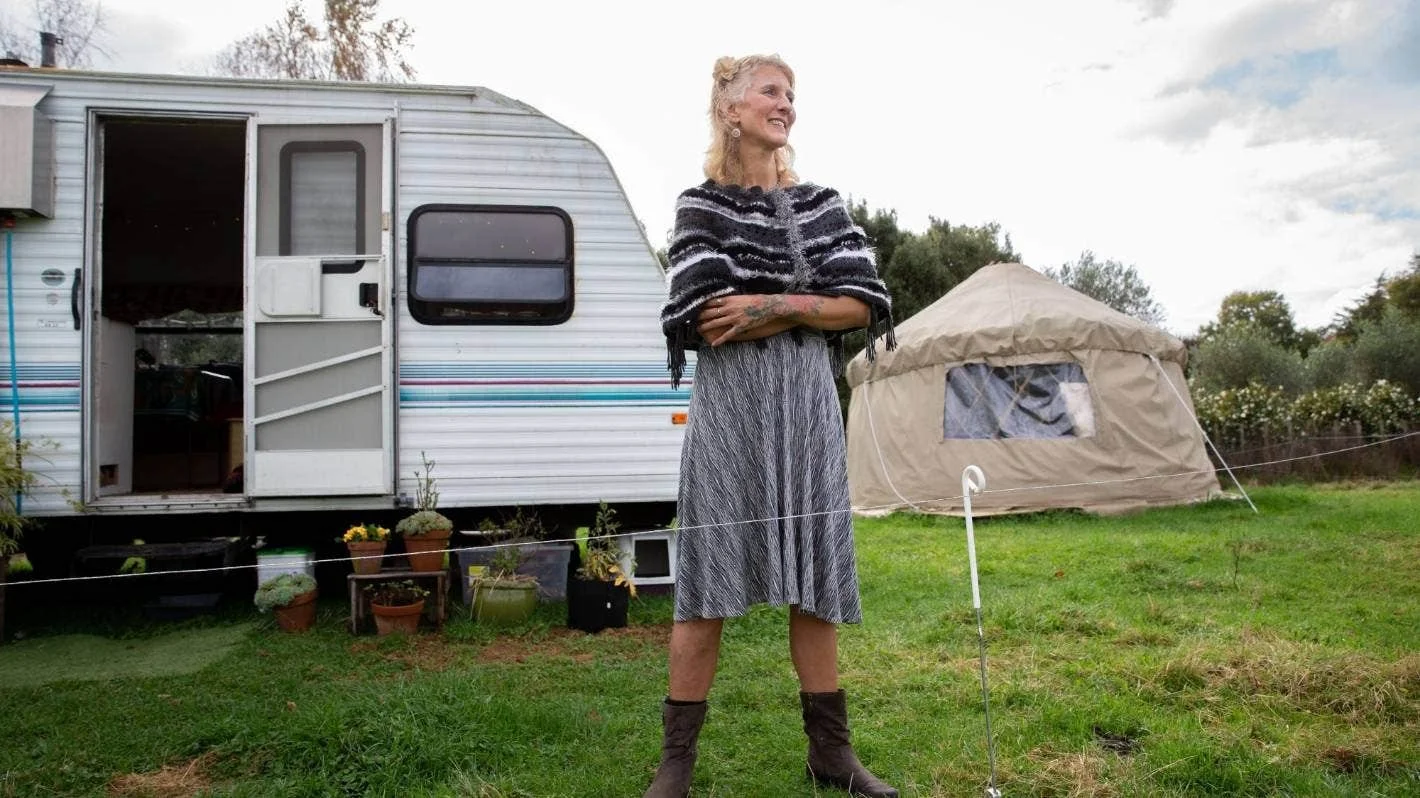
Zola’s Journey from Homelessness to Making a Recipe for Homefullness:
I’m sharing my personal journey dealing with housing instability and homelessness despite having the right ingredients for a stable life. I wrote an article entitled 'Homefulness: Recipes for Baking, Belonging, Connection, and Resilience into Housing Futures', which uses a creative recipe format to illustrate the systemic issues contributing to housing instability.
In my life of 52 years, I’ve lived in 12 countries, but ironically, it is in one of the wealthiest nations, where I've struggled the most with secure housing.
After moving to NZ in 2016 with my partner and children, we owned a house, but my partner left the relationship, forcing me to sell our home, and initiating a period of instability. Over nine years, I've lived in 16 different places ranging from short term rentals, to couch surfing, Airbnbs, room shares, to finally owning my own tiny home.
Despite having a master's degree and stable job, I faced discrimination and struggles in the housing market. My story is a microcosm of a larger broken system where housing is treated as a commodity, not a human right.
Through my consultancy and podcast, I'm advocating for 'Homefullness,' emphasizing collective housing models and shifting housing to be about belonging, sustainability, and community.
My actionable recipes for 'Homefulness' give ways of transforming existing neighborhoods and/or creating intentional communities from scratch, arguing for systemic change to ensure secure, affordable, and adequate housing for all.

Redefining Rural Development: A roadmap to create a network of Circular Economy Villages
This newsletter explore the concept of Circular Economy Villages, which aim to integrate sustainable, community-driven housing developments with essential public infrastructure.
Steven Liaros promotes this approach as a solution to the challenges that many well-designed, intentional communities face during planning and financing stages.
The villages would feature efficient energy, water, and waste management systems, emphasizing ecological, economic, and social sustainability.
The development model involves local governments and councils in a collaborative rather than antagonistic role, where developers also deliver necessary infrastructure, thereby reducing costs for local governments.
The development approach underscores the importance of a regulatory framework, community ownership models like Community Land Trusts, and holistic financing strategies to ensure the successful implementation of these villages.
Also find information on the Women Revolutionising Housing Hui through the links.

Women Uniting for Ethical Investment in Affordable Housing
Discover how Women for Homes is a unique approach to ethical investment in housing by empowering women with the tools, knowledge and networks. This inspiring initiative educates women on financial strategies and fosters a community dedicated to creating affordable and sustainable homes. In our latest newsletter article, Zola speaks with Dionne from Women for Homes about how ethical investments can transform housing development and offer practical solutions for housing affordability and sustainability. She offers women a chance to join this movement and become an ethical investor in Women for Homes. Read on to learn how.

Common Ground newsletter, May 2025
Topics:
Women R-Evolutionising Housing Hui—info & survey
CoHoHui—on the future of housing in Aotearoa
Participatory Permaculture Design for Thriving Neighbourhoods
Cooperative Living & Affordable Housing event—18 May near Motueka
Homefullness Show—upcoming episodes & first member
NZ Housing Survey—have your say for better housing choices
Community-Led and Affordable Housing--—a successful model

Housing Crisis Unlocked: The Legal Path to Affordable, Cooperative Living
In the latest episode of the Homefulness Show, Sophie, a PhD graduate in law, discusses her research on achieving affordable housing through collective and cooperative models.
The discussion covers the state of collective housing in New Zealand, challenges in changing the narrative around “only private” homeownership, and lessons from foreign models.
Sophie highlights the need for regulatory changes and stronger policies to recognize the right to housing as a human right. The conversation delves into practical solutions, legislative advancements, and spreading awareness about collective housing.

Gentle Density: Backyard housing development that leaves room for nature & connection
Gentle density is a term in Australia for infill housing development in urban areas, to create more housing within existing neighbourhoods, also known as incremental development in the U.S.
I interview Mark and Lynda Utting on the Sunshine Coast of Queensland Australia. They share about their way of developing housing in their backyard to give a great place to live to the future residents.
They are able to do this because their area has been rezoned to medium density, meaning they've been given permission to build up to nine units in their backyard.
A lot of people get worried when they hear "density" and infill development because downsides can include shade blocking out nearby houses, it might not match the character of the original neighbourhood, too many cars parked on the road, etc.
Yet, Mark and Lynda have come up with a land-use and housing design that I think few would have problems with. They have kept it to four new dwellings because they are prioritising quality of life for their residents and more sustainable and environmental outcomes.
This is a great interview because it showcases how density and infill development can be done better. They speak about the challenges of being lay-developers (not professional) but also the joy and opportunity of learning new skills and knowledge, of creating a sense of belonging to place, and the resources they've found helpful in their endeavour. Visit their Instagram page to see what that can look and function like.
We speak to the need for Councils to give incentives for infill development that prioritises better social, environmental, and affordability outcomes rather than the usual profit motive of conventional developers. And that councils can give assistance or support to lay developers to achieve these better outcomes.
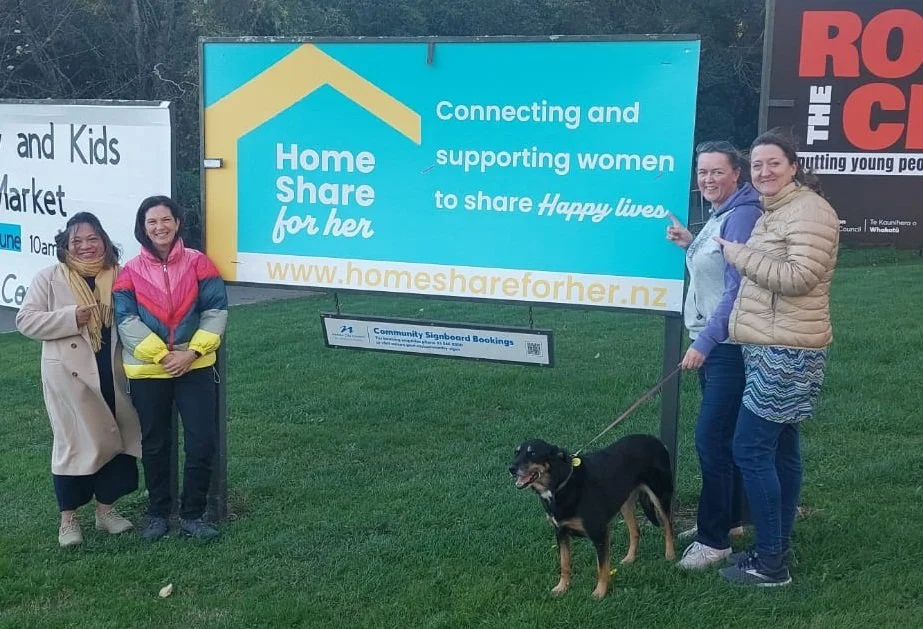
HomeShare for Her, Co-op Living, easier THOW policy
The HomeShare for Her program is located in the Nelson-Tasman region of Aotearoa NZ. The program addresses the lack of affordable housing and the lack of available housing for single women. According to a Stuff article in April 2023, “low wages and expensive housing make the Nelson Tasman area unaffordable” with the region’s housing being the third worst in the country.
But the other thing that the programme does is it mitigates the problems that can come up when people share a living space together.
So, HomeShare for Her hopes to mitigate problematic house-sharing experiences and help women have the best possible shared living situation, sharing the home in a way that's equal, where everyone living there feels like the house really is their home.
This a programme that could be replicated in other regions so listen in to learn about how it's done.

Cooperative Living, Tiny Home Challenges, Support for Landsharing
Around the country, people are trying to get their housing needs met with Tiny Homes on Wheels (THOW)*. Unfortunately, many are getting told by their council that they are in breach of the building act and the resource management act.
Policies differ and can even be contradictory between central and local government planning regulations—is it a building or a vehicle? What does fixed to land mean? How long can it be lived in before being considered a dwelling? These contradictions create insecurity for people living in tiny homes and for the landowners who have offered their land for a THOW to be parked.

Women catalysing affordable and collaborative housing and neighbourhood models
The Housing Older Women’s Movement contracted me to support them to roll out the My Home, Your Home, Our Homes community engagement series in SE QLD to catalyse affordable community-led housing. It was a successful and jam packed two weeks of events.