
Redefining Rural Development: A roadmap to create a network of Circular Economy Villages

The CEV offers an affordable, quality rural life, connected to nature and neighbours
In paving a way for sustainable, connected, affordable, and resilient rural housing development, Circular Economy Villages present a transformative approach that could redefine how we develop hamlets and live in rural areas. This model not only emphasizes the great potential of eco-friendly communities but more importantly, addresses the most challenging aspects of rural housing development: planning policy, finance, and infrastructure. By creating a replicable template and roadmap, these villages can overcome traditional barriers, offering a new paradigm in rural community-centric living.
The Vision of Circular Economy Villages
Circular Economy Villages are designed to function without relying on councils to provide the supporting infrastructure. Instead, they integrate the housing and infrastructure delivery processes to create self-sufficient, resilient communities that thrive. These villages are based on “circular” sustainability principles, where waste is minimized, and resources are efficiently managed by the residents themselves. This vision encompasses not just an individual village, but a network of interconnected villages that work collectively towards mutual goals.
Rural Planning Policy: A Paradigm Shift
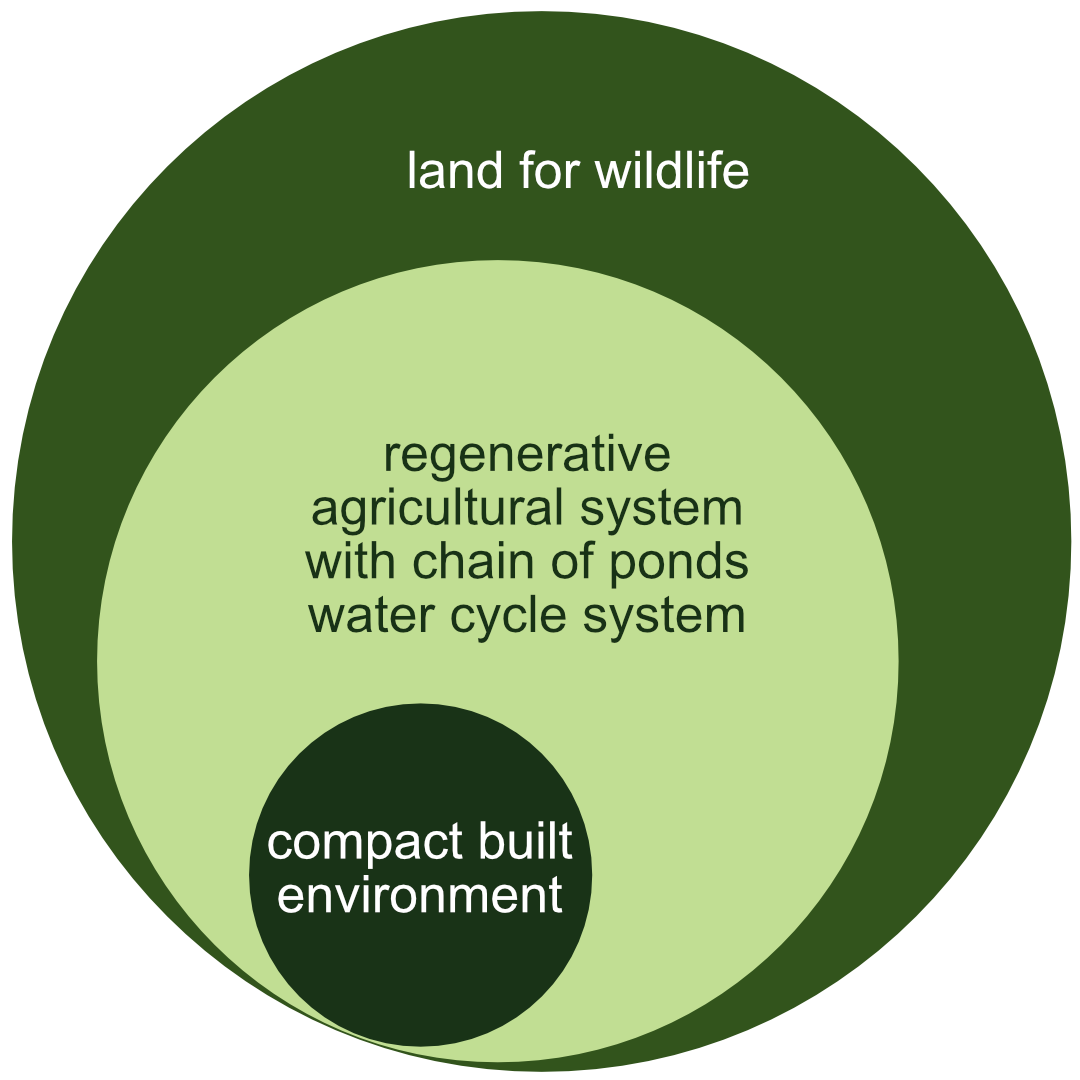
The CEV only build on 20% of a rural property, leaving room for food, ecosystem services, and wildlife.
Appropriate, adaptive, and fit-for-purpose rural planning is crucial in enabling these villages to get established. The model challenges existing planning policies that often see rural development as a threat to agricultural land or rural character. By utilizing only a small percentage of land for housing (around 20%), these villages preserve the natural landscape, maintain agricultural productivity, and offer a rural life where home, work, education, commerce, food, and social activities are available from within the community neighbourhood itself—not via a long commute into town. Councils are encouraged to embrace this innovative model as it inherently resolves many concerns associated with conventional development.
Infrastructure: Sustainable and Self-Sufficient
One of the standout features of Circular Economy Villages is their infrastructure model. These villages incorporate nature-based water systems, renewable energy, and land use for food production, effectively reducing the burden on councils. The development process seamlessly integrates public and private infrastructure, which means councils do not have to shoulder the costs of infrastructure delivery. This approach effectively alleviates financial and logistical constraints on local governments.
Solving Three Main Barriers: Planning, Finance, Infrastructure
The success of Circular Economy Villages largely hinges on solving three main barriers: planning policy, financing, and infrastructure delivery. By creating a comprehensive template and roadmap, these villages provide a solution that can be adapted and implemented by varying councils and communities. With thoughtful collaboration, these roadmaps help align the interests of councils, developers, investors, and residents towards a common vision of sustainable development.
A Day in the Life: Quality Living and Diverse Lifestyles
Imagine a day in the life of someone living in a Circular Economy Village. Residents awaken to a tranquil, rural environment where essential amenities like food, water, and energy are readily available and sustainably managed by the residents. The close-knit community fosters neighbourly connections, shared responsibilities, and empowers individuals to engage in fulfilling activities. With various tenure types, these villages accommodate different lifestyles, from settled residents to those preferring a nomadic existence.
Why Councils Benefit: Economic and Social Savings
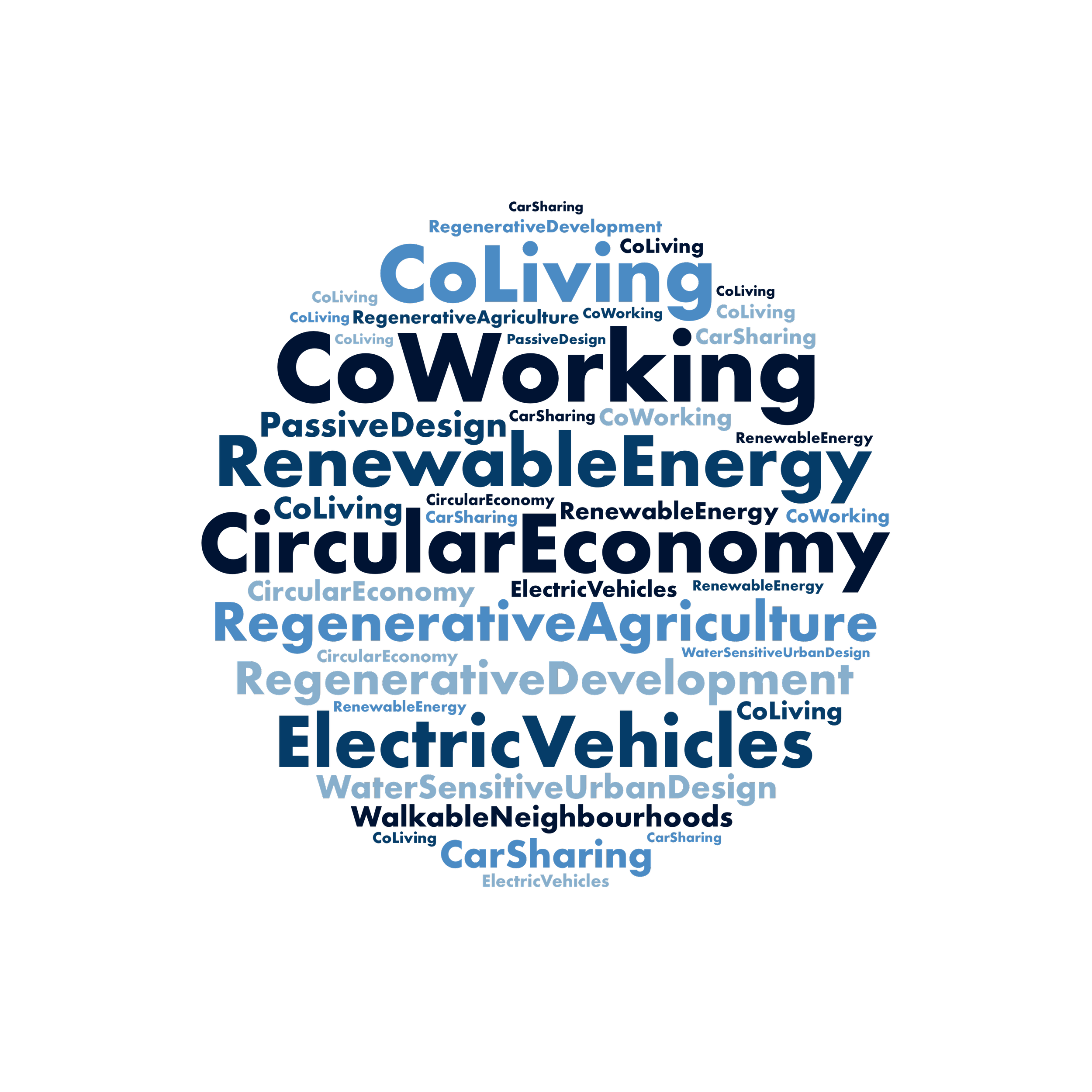
The numerous benefits of a CEV for environment, social, and economic systems.
Supporting the establishment of Circular Economy Villages offers numerous benefits for local councils. These villages help councils save money on infrastructure costs and reduce social burdens by promoting well-being and reducing the need for external services. Additionally, they encourage economic vitality by attracting necessary workers and enhancing community resilience, providing a win-win scenario for regional planning and development. Employment and income-generating opportunities within the hamlet include: food production and catering, agri-tourism, training in regenerative practices, management of the commons, education, cottage industries, and more.
Bellingen Shire Council in Australia has already approved the feasibility study for locating land, resources, and other needs for piloting a CEV within the Shire. They have numerous documents that show the alignment and benefit this model has for the Council and their initial scoping of land. See the link below for the Council documentation.
Diversity and Flexibility in Village Models
Despite a shared overarching vision, each Circular Economy Village may adopt different operational models (such as the governance of sociocracy) and tenure types (such as cooperative ownership or renting), making them adaptable to various regional needs. Whether led by developers, residents, or a collaboration of stakeholders, the villages can cater to diverse community desires. This flexibility ensures that each village remains rooted in its regional context while being part of a broader, supportive network.
Call to Action:
If this model appeals to you for living, developing, or enabling as a Council, check out the resources below to learn more. Then, get in touch with your local council to present to them about this model, get them on board, consider where this could have easy uptake, and discuss doing a feasibility study similar to what Bellingen Shire Council has done.
Links:
Two explanatory videos on the CEV on Steven's YouTube channel: https://youtube.com/@steven_liaros?si=_Av-PyiCkOSA2NbJ
Circular Economy Village website: https://www.cevco.life/
Steven’s website Polis Plan: https://polisplan.com.au/
Research papers, including the PhD are at https://polisplan.com.au/publications
Bellingen Shire Council’s adoption of the CEV model: https://www.bellingen.nsw.gov.au/Development/Planning-Controls/Housing-Strategy-Implementation-Eco-Village-Pilot-Project
Common Ground: https://www.commonground.net.nz/
Women Revolutionising Housing: https://www.commonground.net.nz/women-revolutionising-housing-hui-2025
Join the Homefullness Community: https://www.patreon.com/commonground_zola