
Zola’s Journey from Homelessness to Making a Recipe for Homefullness:
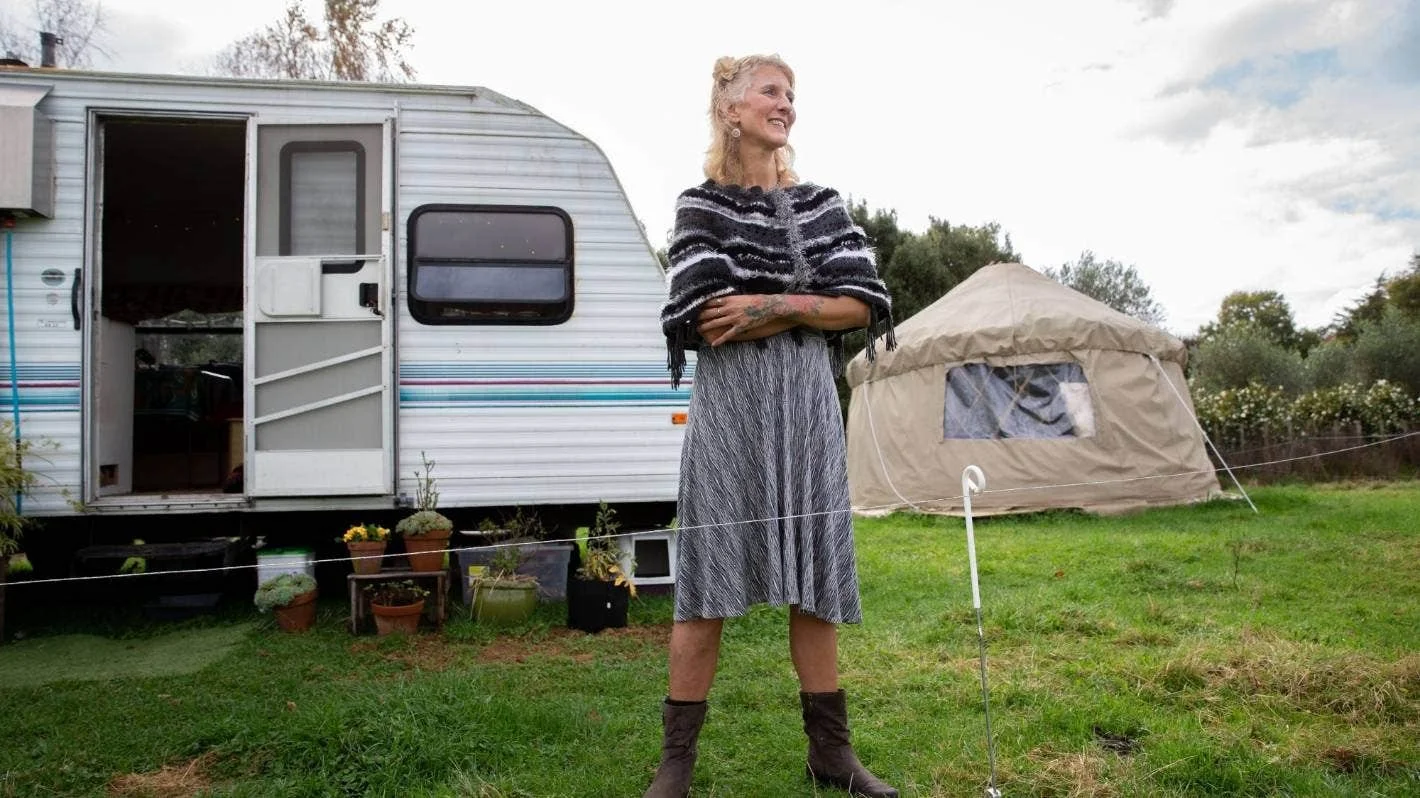
Me (Zola) with my caravan and yurt living situation—an attempt to escape the expensive rent trap and to “own” my own housing.
In the latest Homefullness episode, I share a party of my personal journey with the housing system in Aotearoa that has profoundly shaped my understanding of home and homelessness, something I've interwoven into a creative writing piece called Recipes for Homefullness I'm eager to share with you. Find the link below to that creative writing piece.
This journey has inspired a new perspective I call "Homefullness," a philosophy of living focused on creating resilient, inclusive communities that prioritize human dignity and belonging. And also expanding the definition of homelessness, where even with a roof over one’s head people can feel homeless.
Balancing on the Edge of Stability
I never imagined finding myself on a precarious edge of housing instability. My ingredients for a stable life—higher degree education, many certificates, a career in community development, good health, and home ownership—seemed like a solid recipe. Yet, when circumstances changed with the end of my long-term partnership, these elements did not guarantee the security my teenagers and I needed. Moving through a carousel of temporary homes, from couch surfing with friends to Airbnbs, unable to get accepted by the rental management companies and private landlords to rent a house I could afford, my children and I felt the instability inherent in a housing market that often neglects the single-parent families, migrants, and lower-income earners.
The Broken Housing System
For decades, government policies in New Zealand have created for perfect storm of housing instability for tenants, unaffordable housing prices, and fewer available houses than the demand. Having to shift to 16 different places to live in the nine years I’ve lived in Aotearoa, I often felt homeless—not in the classical sense, but in the precariousness of tenure and my sense of belonging and agency in my home. My journey reflects a broader systemic issue where housing is viewed more as a commodity than a right. The market—filled with overpriced housing and rising rents—doesn't cater to the needs of diverse family structures, and the policies often favor landlords over tenants.
A Recipe for Change
However, from these challenges arose the concept of Homefullness. It's about creating housing systems that foster belonging and connection. This idea inspires new recipes—ones that create or transform neighborhoods into vibrant, communal living spaces. From planting community gardens to organizing shared resources, little by little, we can build resilience and transform our living spaces and neighbourhoods into supportive environments where everyone feels at home and can contribute.
Collective Housing: A Vision for the Future
Homefullness advocates for collective housing models—co-housing, cooperative housing, community land trusts, and other community-focused living arrangements. These models emphasize values-driven and resident-led housing over profit-driven housing: shared resources, collaboration, and sustainable living. Despite their potential, collective housing is still rare in New Zealand, comprising less than 0.5% of housing options in Aotearoa. Yet, with central government support through legislation and tax reform, financial institution support through affordable lending, local government support through regulatory adaptability and establishing Community Land Trusts, and incremental development at the local scale, we all have a part to play to change this landscape.
Personal Activism and Community Involvement
In striving for this vision, I've established initiatives like the Homefullness Show (podcast and YouTube playlist) and the Women Revolutionizing Housing Hui & Network, and I’m serving on the committee of The Housing Innovation Society (THIS) to advance these ideas. Together, we're advocating for housing that respects human rights, eliminates housing poverty, and promotes diverse, connected communities.
No matter your situation, there's a recipe you can follow to foster Homefullness. Begin with small gestures in your community, explore collective living options, or engage in local advocacy. Let's transform housing from an isolated commodity to a shared, nurturing space—an endeavor that not only benefits us but enriches the wider world.
Check out the Recipes for Homefullness in this article.
Thank you for reading, and I invite you to consider which Homefullness recipe you could try. I look forward to hearing your contributions and suggestions for future discussions on this journey toward resilient and inclusive living.
Warm regards,
Zola