
Real Estate in Service to Regeneration: Home as a place that nourishes life, connection, and meaning
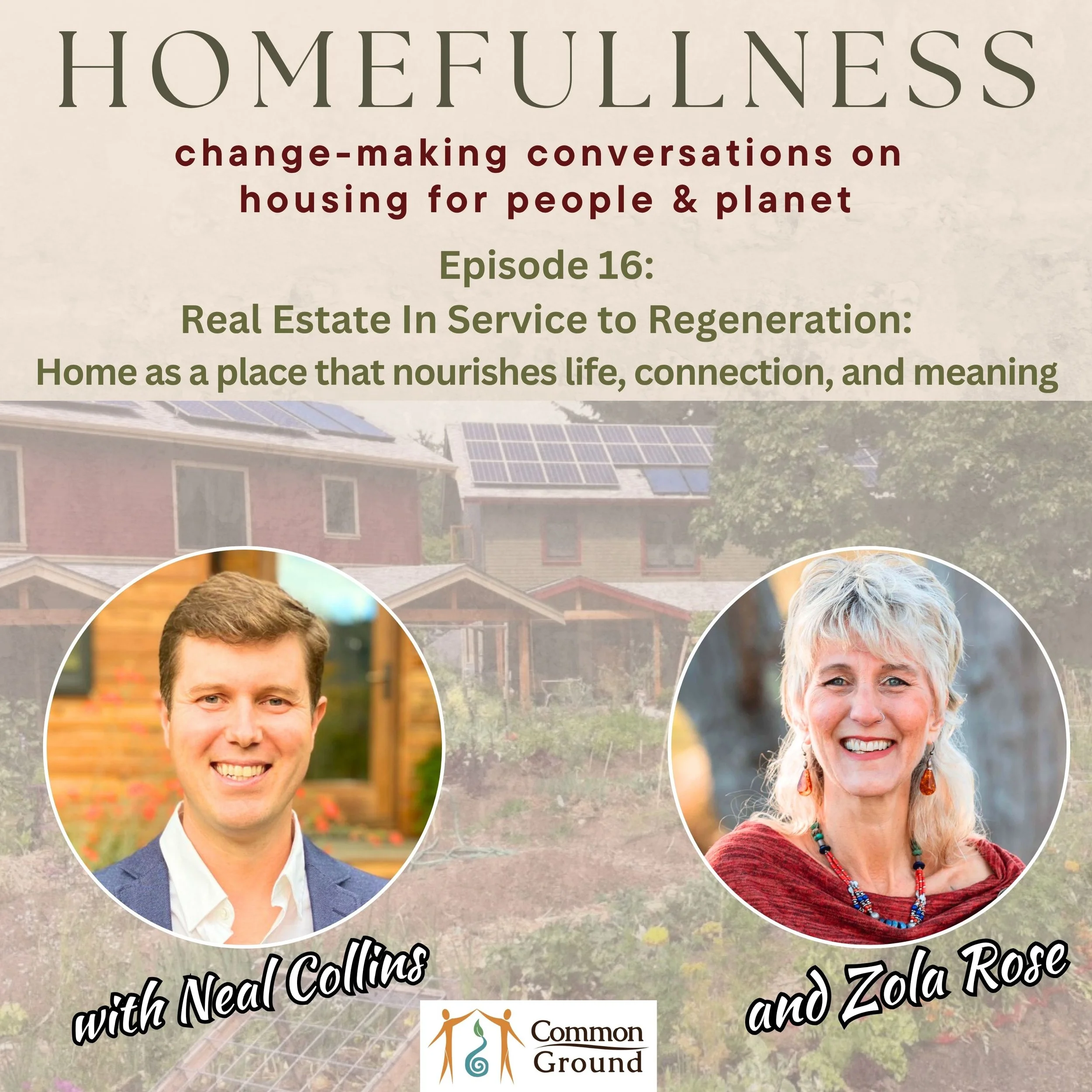
In this Homefullness Show episode, we're venturing into the exciting world of regenerative real estate with Neal Collins from the Regenerative Real Estate Podcast and Choose Latitude. Here we explore how real estate can go beyond mere transactions to become a transformative force for our communities and environment.
As of mid-June 2025, I’m embarking on my own housing journey and seeking places that have regenerative potential. I need to relocate my tiny home from Riverside Community as my lease ends April 2026 so I’m starting to see what land and homes could work for the next stage of my own homefullness.
The challenges I have in finding an appropriate, suitable sites are: lack of established regenerative neighbourhoods or homesteads to buy within the area I wish to live, the high cost of empty land would leave little to nothing for developing the site, the time it takes to find others with whom to collaborate on a larger initiative, the short time I have before I need to relocate.
Defining Regenerative Real Estate:
Regenerative real estate seeks to redefine the relationship between people and places, emphasizing sustainability, community engagement, and ecological harmony. Neal Collins shares his journey to becoming a real estate change agent, inspired by his experiences in India and the Maldives, where architecture and community development intertwined with natural principles.
Latitude: A New Paradigm:
Latitude is a company driven by the principles of regeneration. Neal discusses how they work with homebuyers, sellers, developers, and community stakeholders to rethink habitats, leveraging nature's principles of abundance, circularity, and beauty. Neal envisions real estate not just as ownership but as stewardship, encouraging a deeper bond between people and their environment.
The Power of Place-Based Living:
This episode delves into how regenerative real estate can shape thriving communities. Neal reflects on innovative housing models, shared resources, and eco-friendly practices that foster self-sufficiency and sustainability. With a focus on ecological, social, and economic attributes, Neal outlines a comprehensive checklist for selecting an ideal site for regenerative living.
Transforming Narratives:
Zola invites us to reconsider traditional real estate paradigms, emphasizing the importance of language in shaping our mindset. She advocates for using terms like "land" or "site" over "property" to inspire stewardship and relationship. Neal challenges the status quo, urging a cultural shift towards relationship-based housing over transactional ownership.
Creating Change and Empowering Communities:
Neal's vision for regenerative real estate encompasses change at multiple levels, from policy advocacy to community engagement. He shares insights into cooperative housing models, community land trusts, and the potential for sustainable, affordable housing solutions. Through Latitude’s work, Neal highlights the transformative power of real estate agents as change agents, guiding clients towards life-giving, community-centered environments.
Conclusion:
As Neal Collins aptly puts it, regenerative real estate challenges us to engage in visionary work—imagining and experimenting with new cultural frameworks that prioritize people and planet. Whether through cooperative housing, eco-villages, or reviving agricultural lands, Neal and Latitude showcase the possibilities of real estate as a force for positive change.
Let's dream together and build a world where our homes and communities flourish in harmony with nature.
Check out the Homefullness Show on any podcast app, on the Common Ground YouTube channel or from the Common Ground website: https://www.commonground.net.nz/show
Other links:
https://chooselatitude.com